
Trainer Accountability – Minimum Evidence Based Standards
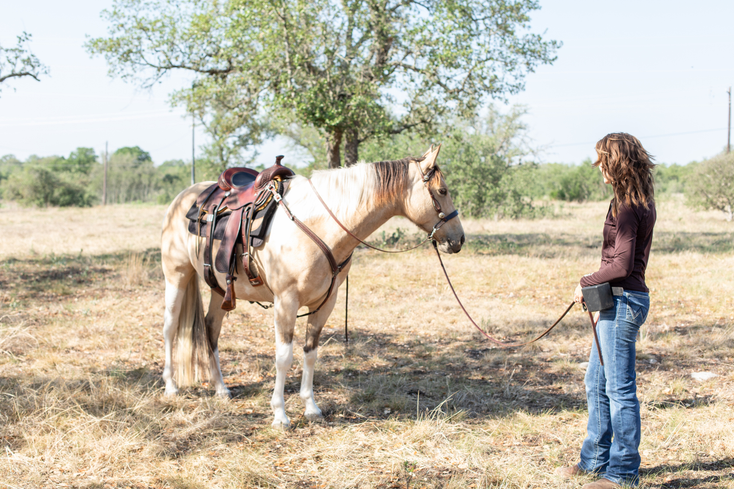
Purpose: This checklist outlines minimum, non-negotiable standards that should be met by anyone claiming to be a horse trainer or instructor in the modern era.
It is grounded in equine learning theory, welfare science, and ethical practice—not tradition, popularity, or branding.
This is not about style or discipline. It is about competence, accountability, and horse welfare.

1. Language & Framing Standards
A trainer meets minimum standards if they:
- Avoid anthropomorphic and moralized terms (e.g., stubborn, disrespectful, naughty)
- Can clearly explain behavior without blaming the horse
- Uses precise, welfare-aligned language when describing training outcomes
- Acknowledges uncertainty rather than defaulting to dominance narrative
Red flag language includes:
- “He knows better”
- “Lesson learned”
- “Just needs more pressure”
- “You have to show them who’s boss”
2. Understanding of Equine Learning Theory
A trainer meets minimum standards if they can:
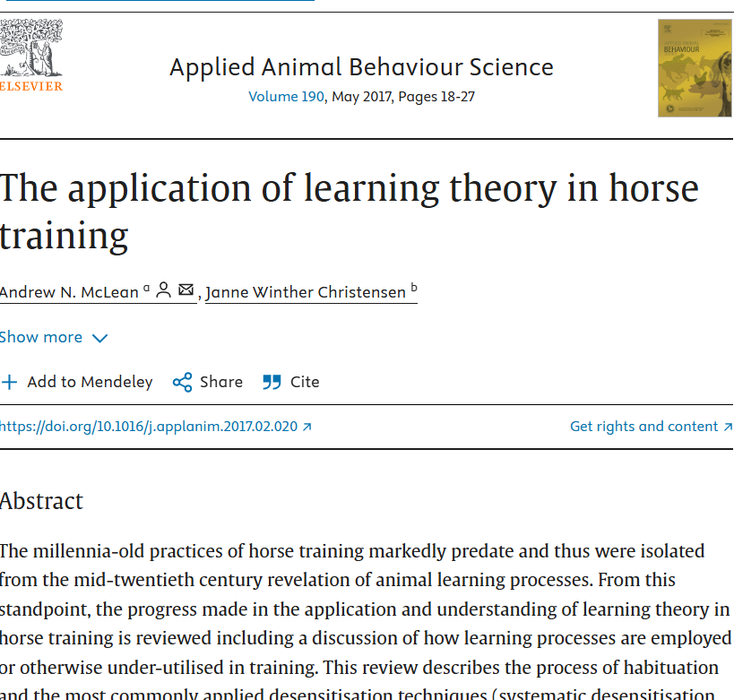
- Correctly explain negative reinforcement, positive reinforcement, punishment, and extinction
- Demonstrate accurate timing of pressure and release
- Identify when a horse does not understand a task
- Adjust methods when learning is not occurring
Red flags:
- Continuous pressure without release
- Escalation framed as clarity
- Punishment used to suppress expression rather than teach
3. Welfare & Emotional State Awareness
A trainer meets minimum standards if they:
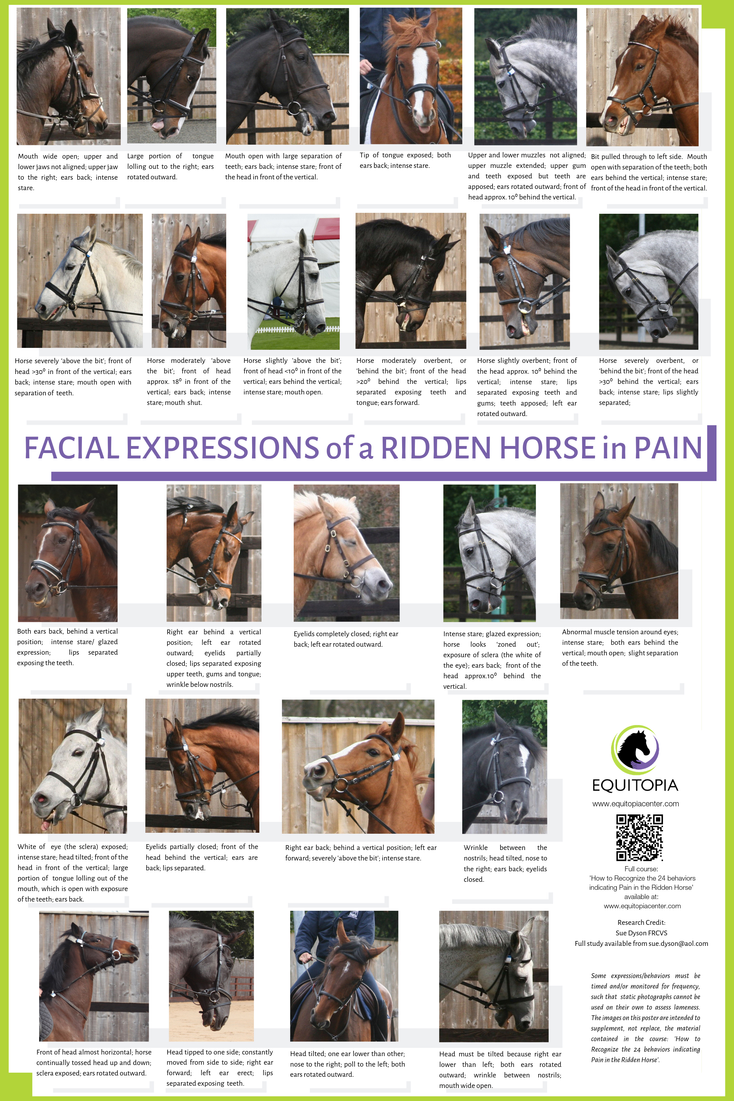
- Can identify common stress and conflict behaviors
- Acknowledge fear, anxiety, and frustration as relevant training variables
- Do not label shutdown or immobility as calmness
- Encourage investigation of pain or discomfort when behavior changes
Red flags:
- Dismissing stress as attitude
- Praising lack of reaction without context
- Ignoring subtle signs of distress
4. Biomechanics, Anatomy & Physical Capability
A trainer meets minimum standards if they:
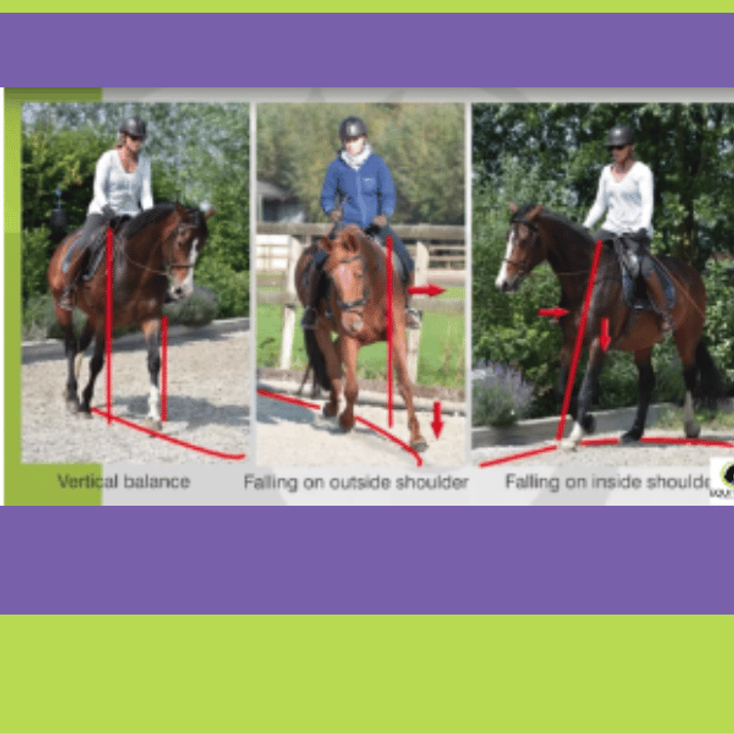
- Understand basic equine biomechanics relevant to their discipline
- Can explain whether a horse is physically prepared for a task
- Adjust expectations based on age, condition, and conformation
- Recognize when behavior may be pain-related
Red flags:
- Repeatedly drilling movements without physical assessment
- Forcing posture or frame through equipment or pressure
5. Ethics, Transparency & Accountability
A trainer meets minimum standards if they:
- Welcomes questions rather than discouraging them
- Can explain why a method is used, not just that it works
- Is open about the limitations of their knowledge
- Prioritizes the horse’s welfare over speed, optics, or results
Red flags:
- “This is how it’s always been done”
- “You’ll ruin the horse if you don’t do this”
- Shaming or intimidating clients
Final Reality Check
Ask yourself:
“If this person removed their authority, tools, and narrative—would the horse’s behavior still look like learning, understanding, and well-being?”
